

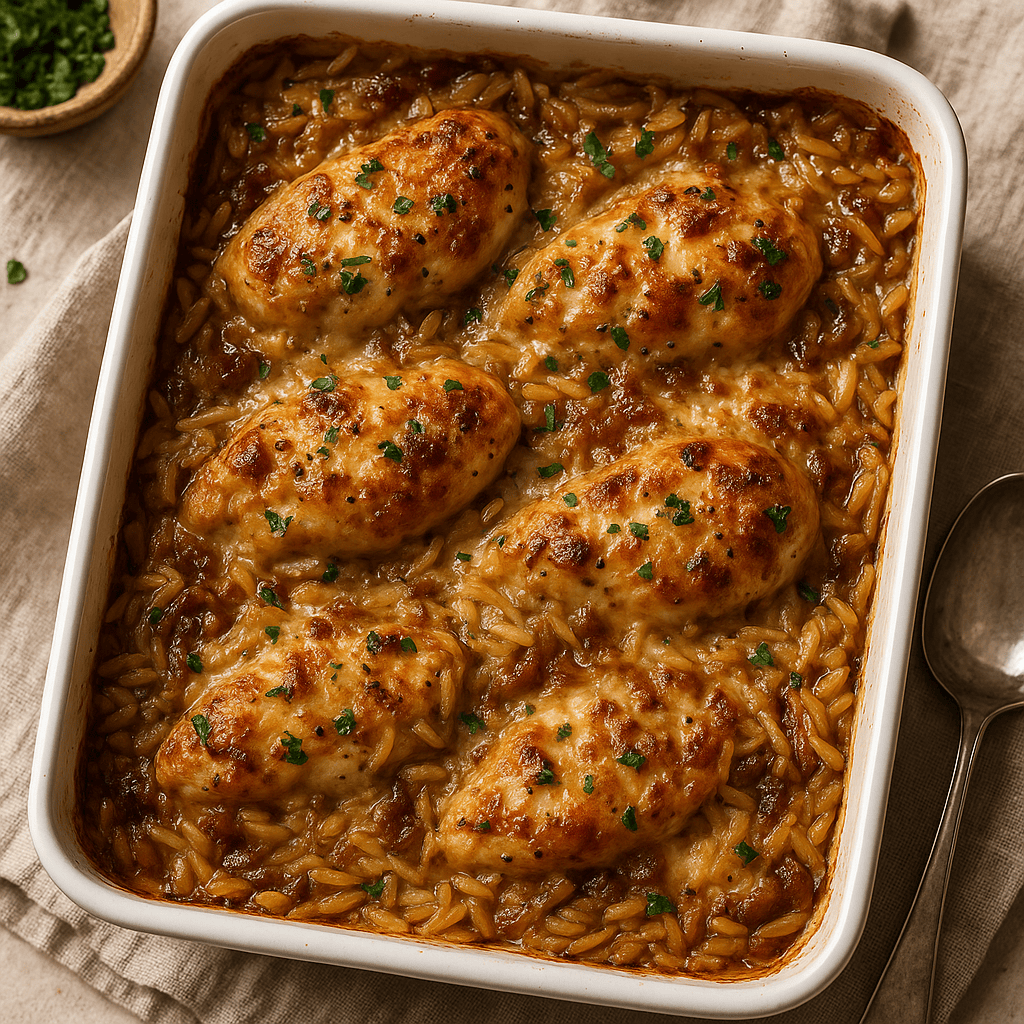
Ingredients
For the Caramelized Onions
2 large yellow onions, halved and thinly sliced (about 5–6 cups sliced)
2 tbsp unsalted butter
1 tbsp olive oil
1 tsp kosher salt, divided (½ at the start, ½ later)
¼ tsp black pepper
1 tsp sugar (optional, helps promote browning)
Optional flavor boosters:
1–2 tbsp dry white wine
½ tsp balsamic vinegar
½ tsp Worcestershire sauce
For the Casserole Base
1 ½ cups uncooked orzo
2 cups shredded cooked chicken (rotisserie or leftover roasted is ideal)
2 cups beef broth (for deeper French onion flavor)
1 cup chicken broth
½ cup heavy cream (or half-and-half for lighter)
1 tbsp Worcestershire sauce
2 cloves garlic, minced
1 tsp dried thyme or 1½ tsp fresh thyme leaves
½ tsp onion powder
Additional salt & pepper, to taste
Cheese Topping
1 ½ cups shredded Gruyère cheese
½ cup shredded mozzarella
Optional: ¼ cup finely grated parmesan for browning and sharpness
Optional Garnishes
Fresh thyme springs
Parsley
Crispy fried onions
A drizzle of cream or dollop of sour cream
Fresh cracked black pepper
Equipment Recommended
Large oven-safe skillet, braiser, or Dutch oven (3–4 qt capacity)
Wooden spoon or heatproof spatula
Chef’s knife + cutting board
Measuring cups/spoons
Foil or skillet lid
Oven preheated to 400°F (205°C)
Instructions
- Caramelize the onions (the most important step)
Heat fat:
Place the butter and olive oil in your skillet over medium heat. Allow the butter to melt fully and start to foam slightly.
Add the onions:
Add all the sliced onions at once. They will look like too much—this is normal. Caramelization reduces their volume dramatically. Sprinkle with ½ tsp salt.
Begin sweating the onions (5–8 minutes):
Stir occasionally as the onions begin to soften, release water, and become translucent. At this point they will look pale and wet.
Start caramelizing (10–20 minutes):
Reduce heat slightly (medium-low).
Add the optional 1 tsp sugar if you want deeper browning faster.
Continue stirring every few minutes—just enough to avoid burning but not so often that they can’t brown.
Develop deep color (another 10–15 minutes):
As the onions darken, you may need to adjust heat to prevent burning. You’re looking for a deep golden brown, soft, jammy texture.
Deglaze (optional but highly recommended):
Add 1–2 tbsp wine, ½ tsp balsamic, or ½ tsp Worcestershire to dissolve the browned bits. Cook 1–2 minutes until liquid is mostly reduced.
Season again:
Add the remaining ½ tsp salt and ¼ tsp pepper.
Add minced garlic and cook 1 minute until fragrant.
Note: Properly caramelized onions should be soft, sweet, golden, almost spreadable, and reduced to about 1½–2 cups.
- Toast the orzo
Add the uncooked orzo straight into the onions.
Stir to coat the grains in the butter/oil and onion mixture.
Toast for 1–2 minutes until the orzo smells nutty.
This step improves texture and prevents mushiness.
- Add liquids, chicken, and seasonings
Add broths:
Pour in the beef broth and chicken broth. Stir well to loosen anything stuck to the bottom.
Add cream:
Stir in the heavy cream.
Add chicken:
Fold in the shredded chicken so it’s evenly distributed.
Season:
Add Worcestershire, thyme, onion powder, plus a few grinds of black pepper.
Taste the broth—add salt if needed.
- Bring to a simmer
Increase heat to medium-high.
Allow the mixture to come just to a gentle simmer—not a rolling boil.
Once bubbling softly around the edges, turn off the heat.
Simmering before baking helps the orzo cook evenly.
- Bake the casserole
Cover the skillet with its lid or tightly with foil.
Place in the preheated 400°F (205°C) oven.
Bake 18–22 minutes or until the orzo is tender, creamy, and most liquid is absorbed.
If the mixture still looks watery:
Bake uncovered an additional 3–5 minutes.
If too thick:
Stir in a splash of hot broth before adding cheese.
- Add the cheese topping
Remove casserole from the oven.
Stir once to loosen everything.
Sprinkle Gruyère over the top in an even layer.
Add mozzarella for stretchiness.
Add parmesan if you want more browning.
- Melt and brown the cheese
Return to oven uncovered for 5–8 minutes.
If desired, broil on high 1–2 minutes until golden and bubbling—watch carefully.
- Rest and serve
Let the casserole rest 5 minutes to thicken slightly.
Garnish with thyme, parsley, crispy onions, or cracked pepper.
Scoop and serve warm.
Troubleshooting & Technique Notes
If the casserole seems too runny
Resting time is crucial; it thickens as it cools.
You can also add more cheese or simmer longer on stovetop before baking.
If the orzo is undercooked
Add ¼–½ cup hot broth, cover, and bake another 5–7 minutes.
If onions burn
Your heat was too high. Add a splash of broth and scrape up browned bits to save them.
If casserole tastes flat
Add a splash of Worcestershire, a pinch of salt, or a squeeze of lemon for brightness.
For deeper flavor
Replace ½ cup broth with dry white wine.
Add a bay leaf during baking (remove before serving).
Variations
Mushroom Version
Add 1–2 cups sliced mushrooms when the onions begin to brown.
Creamy French Onion Chicken & Rice Bake
Swap orzo for 1 cup long-grain rice; increase baking time to 30–35 min.
French Onion Turkey Orzo
Perfect for leftover Thanksgiving turkey.
Healthier Version
Use half-and-half instead of cream and reduce cheese by 25%.
Gluten-Free
Swap orzo for gluten-free orzo or small GF pasta; monitor liquid levels.